
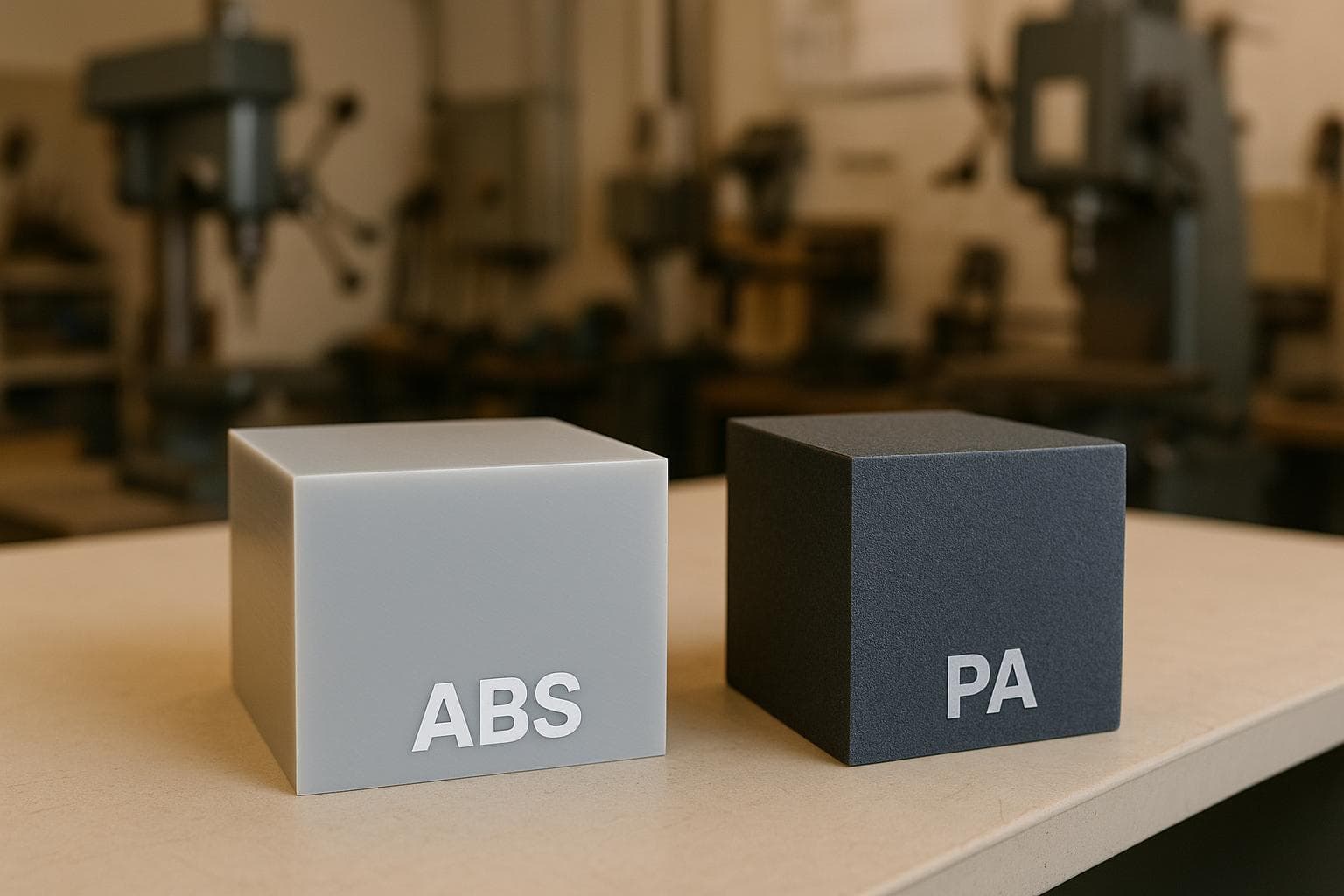
Quick answer: ABS+PC is worth evaluating when a housing, cover, or industrial component needs a better balance of impact, rigidity, and temperature performance than ABS alone usually provides.
When an ABS+PC blend makes sense
- Housings and covers with moderate to high mechanical demand.
- Parts where standard ABS falls short in rigidity or temperature.
- Components that need a balanced mix of finish, toughness, and structure.
What problem it solves
The value of the blend is balance. Instead of optimizing only impact or only stiffness, ABS+PC opens a more useful performance window for many housings, protective parts, and assembly components.
Quick comparison
| Criteria | ABS | ABS+PC | PC |
|---|---|---|---|
| Impact | Good | Better balance | Very high |
| Thermal rigidity | More limited | Better | High |
| Processability | Very friendly | Good | More demanding |
Common mistakes
- Choosing ABS+PC by trend without defining the housing function.
- Assuming it fully replaces pure polycarbonate.
- Ignoring thickness, temperature, and assembly method.
Describe the housing and its environment
If your project needs an ABS+PC blend, share expected impact, temperature, geometry, finish, and manufacturing route. PomDepot can help review whether ABS, ABS+PC, or pure PC gives the best balance.
FAQs
What is an ABS+PC blend used for?
For housings and covers that need more rigidity and thermal performance than ABS, without moving straight to a much more technical resin.
Is it the same as pure polycarbonate?
No. It is a blend designed to balance processability, impact, and rigidity.
What should be reviewed before specifying it?
Impact, temperature, finish, thickness, and operating environment.