
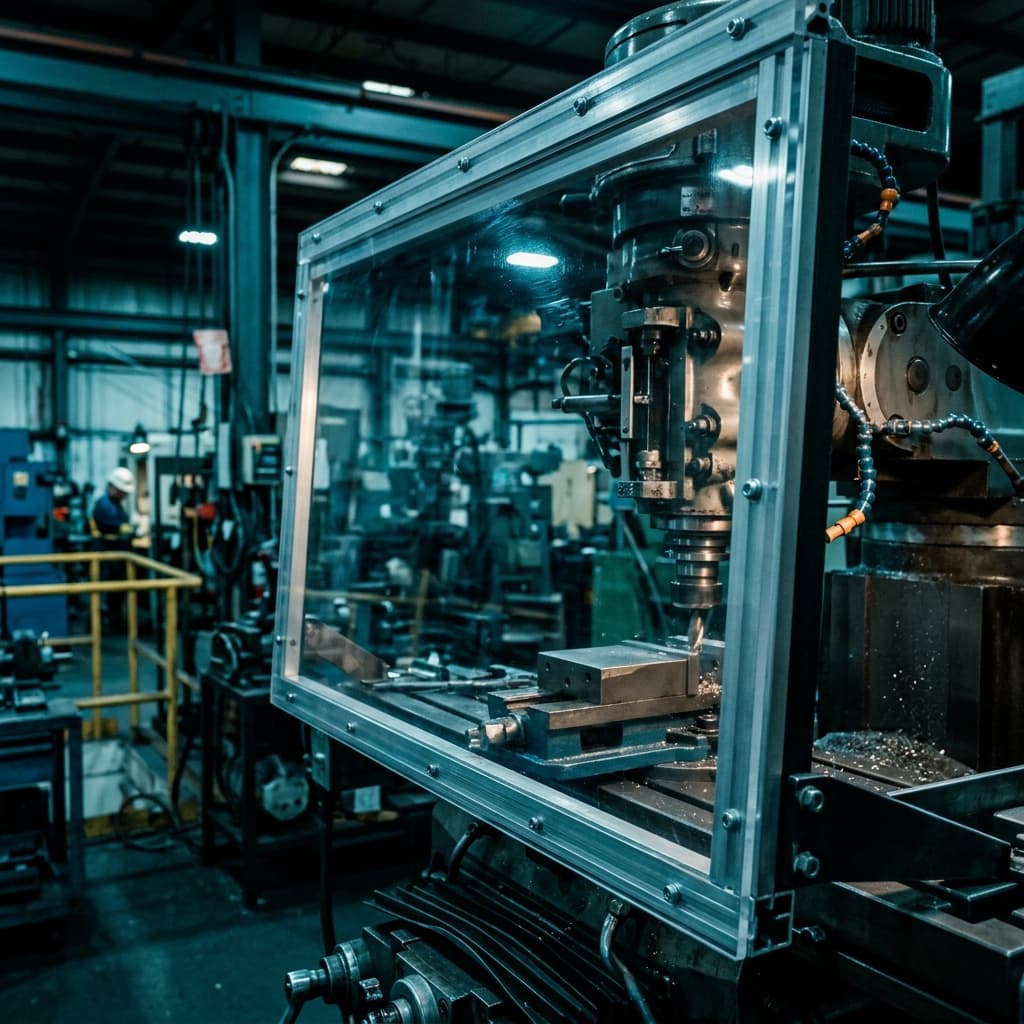
Quick answer: if impact resistance and plant safety matter most, polycarbonate (PC) is usually a better choice than acrylic. If the project values optical clarity, glossy appearance, or lightweight display parts more than mechanical durability, acrylic may work. For machine guards, inspection windows, and industrial covers, PC usually offers more margin against hits and daily handling.
Main difference between polycarbonate and acrylic
Both materials can look similar as transparent sheet, but they do not behave the same in service. Polycarbonate stands out for impact resistance and its ability to handle rougher industrial use. Acrylic often provides stronger initial visual clarity, but it is more vulnerable to breakage from impact, vibration, or aggressive handling.
When polycarbonate makes more sense
- Machine guards and safety barriers.
- Inspection windows in production lines.
- Covers exposed to accidental impact.
- Applications with vibration or frequent handling.
When acrylic may be enough
Acrylic can work in displays, lightweight covers, signage, or parts where appearance matters more than impact resistance. If the part will not face repeated blows or rough handling, it may be acceptable. The common mistake is treating it as equal to polycarbonate in industrial guarding applications.
Industrial selection criteria
| Criteria | PC | Acrylic |
|---|---|---|
| Impact resistance | Very high | Moderate to low |
| Optical clarity | High | Very high |
| Typical use | Guards, covers, inspection windows | Displays, signage, light covers |
| Risk under impact | Lower | Higher |
Common mistakes
- Choosing only by transparency without reviewing impact risk.
- Assuming every transparent machine guard can be made from acrylic.
- Ignoring final form, thickness, and cutting or machining method.
- Buying by material name alone instead of service conditions.
What to review before requesting a quote
Define whether the part will act as a guard, inspection window, cover, or visual panel. It also helps to review thickness, panel size, mounting method, and expected impact. If the part will operate in a tougher industrial setting, polycarbonate is often the safer choice.
Request a technical recommendation
If your project needs transparent industrial sheet or plate, share dimensions, thickness, application, and impact risk. PomDepot can help review whether polycarbonate or another material is the better fit before purchase.
FAQs
Is polycarbonate more impact resistant than acrylic?
Yes. In industrial use, polycarbonate usually provides more margin against impact, vibration, and rough handling.
Can acrylic be used for machine guards?
It depends on mechanical risk, but polycarbonate is generally the more appropriate reference when safety and impact matter.
Is polycarbonate also transparent?
Yes. It offers good visibility, but the main industrial advantage is usually impact resistance rather than appearance alone.