
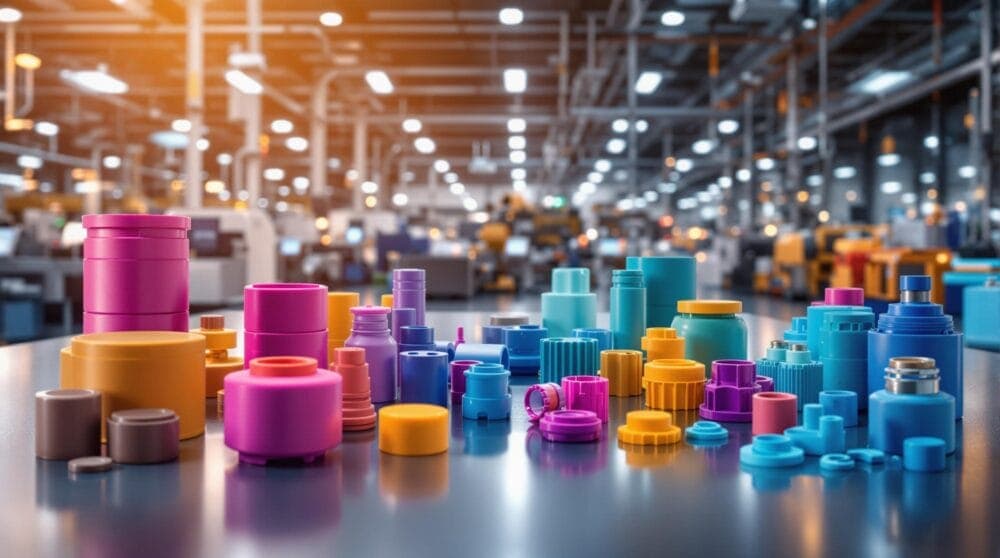
Quick answer: PPS can be a strong option in pumps, valves, and process components when the part needs thermal stability, chemical resistance, and controlled geometry. The final fit still depends on media, temperature, load, and design.
Where PPS deserves a closer look
- Internal supports and structural parts exposed to chemicals.
- Process components that see elevated temperature with important tolerances.
- Electrical or structural applications where humidity also matters.
What to review
- Exact chemical media.
- Continuous temperature and peaks.
- Mechanical load and deformation.
- Natural versus reinforced grade.
Common mistakes
- Comparing PPS only on temperature and ignoring chemistry.
- Assuming one grade behaves the same in every process component.
- Mixing a structural requirement with a sealing requirement.
Validate the real service condition
If the component will work with chemicals, heat, and dimensional precision, share the media, temperature, pressure, and part function. PomDepot can help review whether natural PPS, PPS GF, PEEK, or PTFE makes more sense.
FAQs
Is PPS a good option for chemical process service?
It can be, as long as compatibility is checked against the exact media and loading.
What kinds of parts are often evaluated in PPS?
Supports, insulators, and process components where chemistry, temperature, and geometry all matter.
Does PPS automatically replace PEEK or PTFE?
No. The right choice depends on media, temperature, rigidity, and exact part function.