
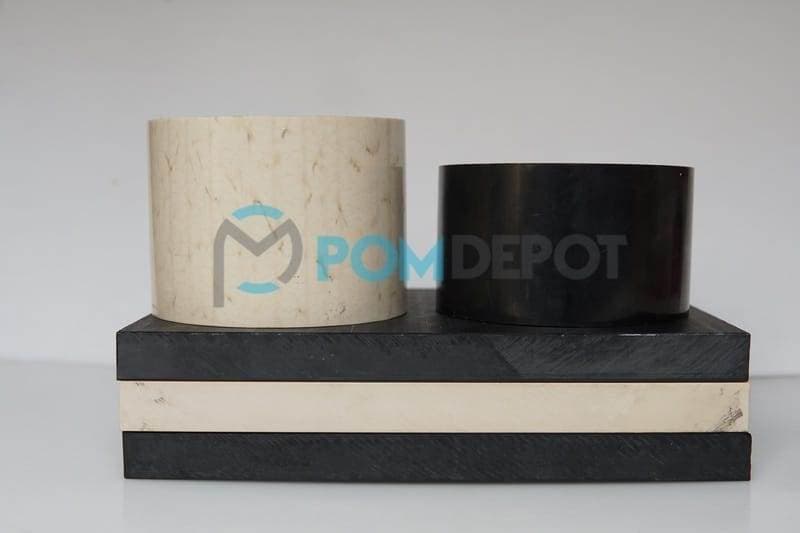
Quick answer: PEEK is a high-performance material evaluated when a part needs more thermal, chemical, and mechanical margin than plastics such as POM, PA, or PC can provide. When someone searches for PEEK material, they usually want to know whether it is truly justified. The practical answer is yes, but only when the critical condition demands it: elevated temperature, aggressive chemistry, sustained precision, or severe service life.
What is PEEK material?
PEEK is short for polyetheretherketone, a high-performance thermoplastic used where other engineering plastics run out of thermal, chemical, or mechanical capacity. It is not chosen just because it sounds premium. It is chosen because it combines heat resistance, dimensional stability, chemical resistance, and mechanical performance in a way that is hard to replace.
Real industrial advantages of PEEK
- Handles more severe thermal conditions.
- Resists aggressive chemicals and cleaning media better than many standard plastics.
- Maintains geometry and function when precision matters.
- Works in parts that must carry load or wear without deforming easily.
- Can replace metal in some components where weight or corrosion is a problem.
When is PEEK actually justified?
PEEK is usually evaluated first when the part works with:
- High continuous temperature.
- Aggressive chemicals or frequent cleaning.
- Tolerances that must hold under service.
- Critical parts where failure costs far more than the resin itself.
In these cases, the point is not simply to use a “better” material, but to reduce technical risk and field failure.
When is it not justified?
If the part runs at moderate temperature, with mild chemistry, and without severe precision or life demands, POM, PTFE, PPS, or PEI may give a better cost-performance balance. The common mistake is specifying PEEK from the start without proving which critical variable eliminates lower-cost alternatives.
Quick comparison
| Criteria | PEEK | POM | PPS | PEI |
|---|---|---|---|---|
| Temperature capability | Very high | Moderate | High | High |
| Chemical resistance | Very strong | More limited | Strong | Depends on media |
| In-service precision | Very favorable | Good | Good | Very good |
| Relative cost | Highest | More accessible | Mid-high | Mid-high |
Common mistakes when specifying PEEK
- Specifying it without defining the real service temperature.
- Using it for reputation instead of verified need.
- Failing to separate chemical need from structural need.
- Ignoring required form, machining path, and final tolerance.
How to decide more clearly
The best question is not whether PEEK is “the best,” but whether the problem truly needs the margin that PEEK provides. If the part operates at thermal, chemical, or dimensional limits, PEEK may be the correct route. If not, it is worth comparing other materials that solve the real problem without oversizing cost.
Share your part environment
If you are evaluating PEEK material, share the temperature, chemicals, tolerances, load, and required part form. PomDepot can help review whether PEEK is truly justified or whether another family covers the application more efficiently.
FAQs
What is PEEK material?
PEEK is a high-performance thermoplastic used when the application requires more heat resistance, chemical resistance, and mechanical stability than a standard engineering plastic can provide.
Is PEEK always the best option?
No. It has real advantages, but not every application needs that level of performance or cost. The right choice depends on the environment and the critical requirement.
When is PEEK worth evaluating against other materials?
When the part faces high heat, aggressive chemistry, sustained precision demands, or loads that leave materials like POM, PA, or PC short.