
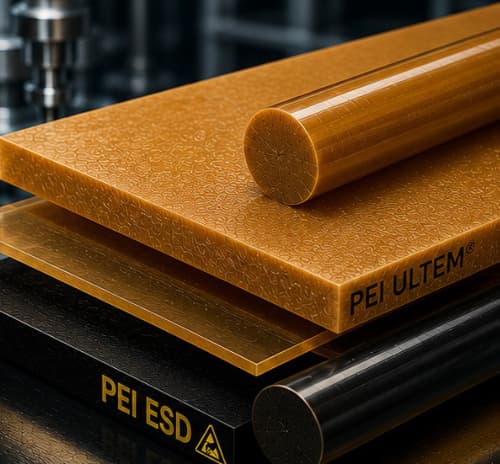
Before requesting amber PEI plate for an inspection window, define what the operator must be able to see and under what lighting. Then check the grade, thickness and surface finish of a sample. A window used to detect the presence of a part has different requirements from one used to tell colors apart or read small markings.
Define what the operator must see through the window
Suppose the operator needs to check a part's position inside a machine. Record the viewing distance, lighting and smallest feature they must distinguish. Test a sample at the planned thickness from the intended viewing position. If color identification matters, include the actual colors the operator will see.
| Aspect | Input for evaluation |
|---|---|
| Visibility | Feature or color to distinguish, lighting, viewing distance and sample thickness. |
| Finish and mounting | Finish of the visible faces, critical dimension, mounting method and operating temperature. |
| Cleaning | Cleaning agent, concentration, contact time and frequency. Repeat the visibility check on a sample exposed to the intended procedure. |
What the grade data sheet provides
Ensinger describes TECAPEI natural as an unfilled, amber PEI. It illustrates how a stock material is identified. Ask for documentation for the plate offered and check whether it addresses your visual requirement. If the window also serves a protective function, specify separate tests and requirements for the assembled equipment.
Test a sample with the intended mounting
Check the same visual reference with the sample free and then installed. Mark the mounting locations and the area that needs to remain visible. Repeat the reading from the operator position after a representative cleaning and temperature cycle. Record glare, marks or changes in visibility. Keep the light, distance and reference the same when comparing two thicknesses or finishes. That gives you a basis for deciding which condition needs more testing before you specify material.
What to send for a quote
Include the grade or reference, thickness, width, length, quantity, delivery city and whether you need a sample for the visibility trial. Include the finish and cleaning agent when they affect selection. See PEI in the PomDepot catalog and request a material quote.
Frequently asked questions
What if the operator needs to distinguish colors?
Test the actual colors through a sample at the planned thickness under the equipment lighting. Record which differences the operator must detect.
Why check the finish on both faces?
Marks, texture and glare can make inspection harder. Evaluate the sample with the finish it will have when installed.
What should I specify if the window is cleaned frequently?
Give the agent, concentration, temperature and contact time. Check appearance and visibility after repeating the intended cycle.