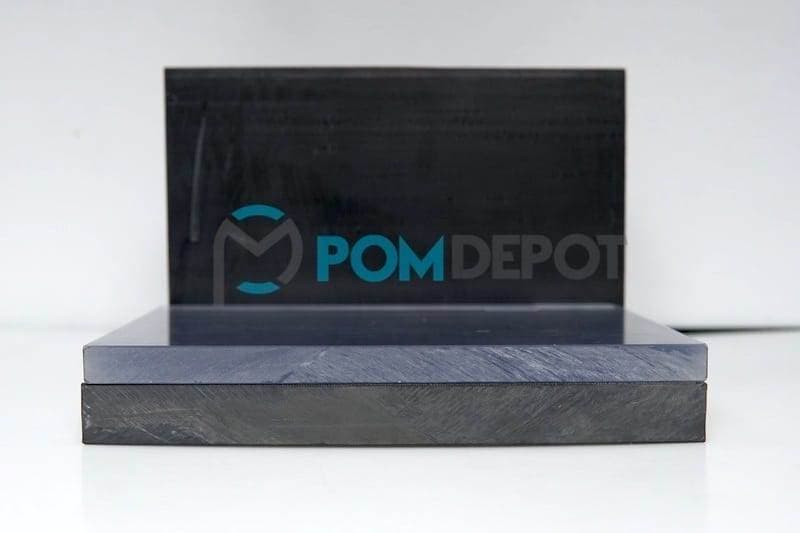

POM ESD (Antistatic)
POM ESD combines the excellent mechanical properties of Polyoxymethylene with integrated antistatic protection. Designed for applications where electrostatic discharges can damage electronic components or cause fires in environments with flammable materials.
Technical Specifications
Catalog reference values. Confirm the grade, test method, and operating conditions against the supplier datasheet before specifying the material.
Features
- Controlled electrostatic dissipation
- High mechanical strength
- Low friction
- Excellent machinability
Applications
Available Forms & Sizes
| Form | Dimensions | Color |
|---|---|---|
| Round rod | Ø20–200 mm × 1000 mm | Black |
| Plate | 610 × 1220 mm, thickness 10–100 mm | Black |
Processing & Machining Notes
The catalog describes machining POM ESD with carbide tools and notes that localized heating can affect the part’s surface resistivity.
General catalog guidance. Cutting, cooling, and heat-treatment parameters need validation for the specific grade and part.
Standards and documentation to confirm
These catalog references do not certify every grade or batch. Request the supplied grade’s document and application scope, especially for food contact, medical use, or ESD protection.
View supporting documentsQuestions about this material
What is POM ESD and what is it used for?
POM with antistatic properties for electrostatic discharge protection in sensitive industrial environments.
What continuous service temperature does the catalog list for POM ESD?
The catalog lists 100 °C for continuous service of POM ESD. This is distinct from melting temperature; confirm the grade’s limit and operating conditions with the supplier.
What industries use POM ESD?
POM ESD is used in: Semiconductor manufacturing, Electronic assembly lines, Automotive industry (ESD zones), Cleanroom equipment.
What surface resistivity does the catalog list for POM ESD?
The catalog lists surface resistivity of 10⁶ – 10⁹ Ω for POM ESD. Confirm the grade, test method, and the part’s behavior in its application; this value alone does not certify an ESD system.
How do you machine POM ESD?
The catalog describes machining POM ESD with carbide tools and notes that localized heating can affect the part’s surface resistivity..
What documentation should I confirm for POM ESD?
The catalog references: IEC 61340, ANSI/ESD S20.20, RoHS. Request documentation for the supplied grade and batch, and confirm its scope before specifying the material.
What forms and sizes is POM ESD available in?
POM ESD is available in: Round rod, Plate. Custom dimensions available on request.