
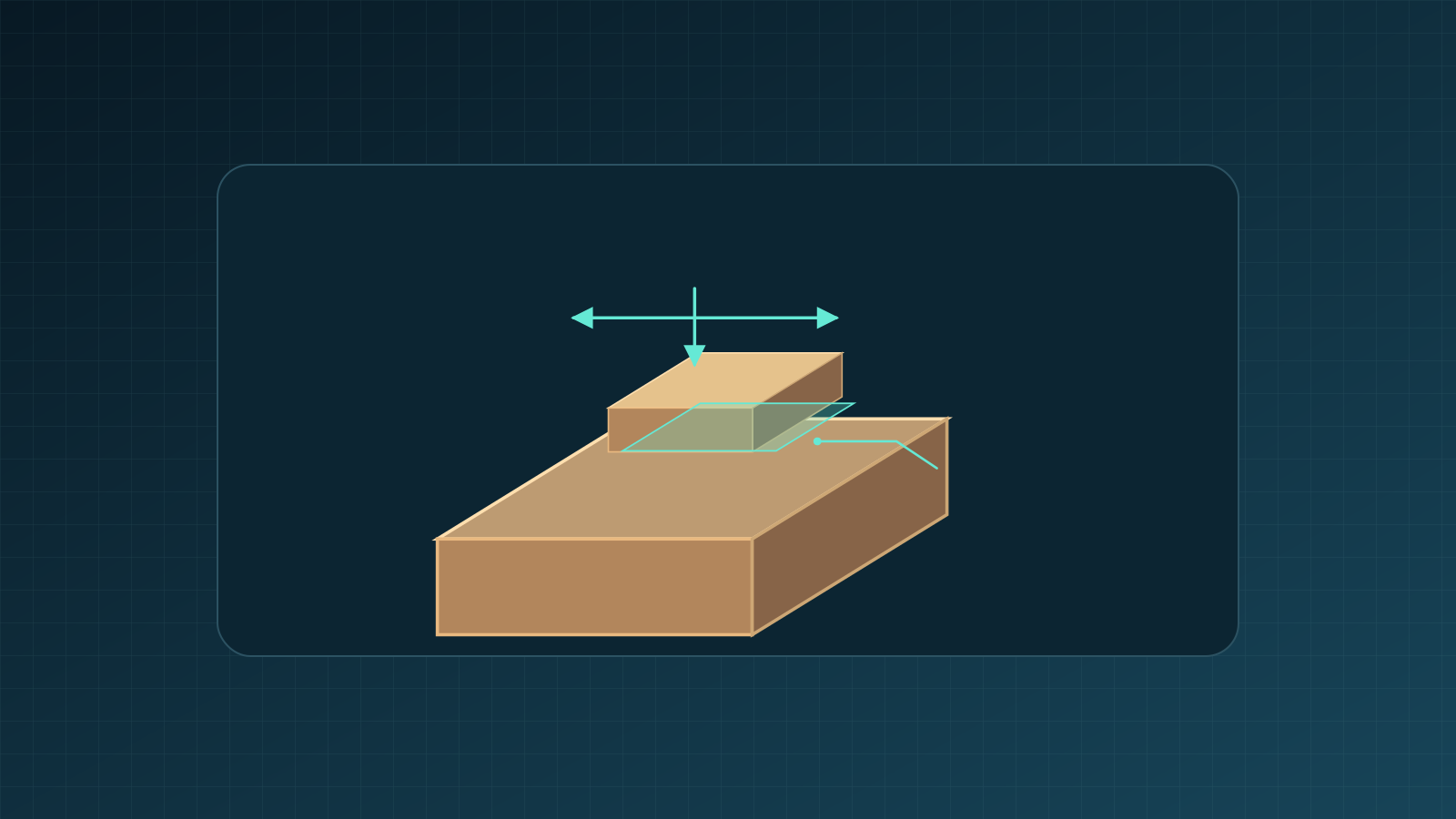
Consider PAI (polyamide-imide) for a guide that runs without lubrication if you can describe the actual contact and define how much wear the equipment can tolerate. Record the surface touching the polymer, load, speed, temperature and allowable clearance. Those inputs tell you what evidence you need to compare a wear grade with the current material.
Describe the contact before picking a grade
A reciprocating guide may start, stop and reverse along the same track. Record stroke length, cycle frequency and any dwell under load. The mating surface matters as well. A guide that runs against steel with a particular finish should be assessed against that finish under representative conditions.
| Input | What to record |
|---|---|
| Counterface | Material, surface finish, geometry and any dust, residue or cleaning agents present. |
| Load and contact | Normal load, apparent bearing area and how contact changes along the stroke. Note any loading concentrated at an edge. |
| Motion and heat | Speed or motion profile, stroke, cycles, dwell and temperature around or near the contact if it can be measured. |
| End-of-life criterion | Maximum wear, clearance, loss of alignment or starting force the system can tolerate. |
What a wear-grade data sheet can tell you
Syensqo describes Torlon 4301 as a wear-resistant PAI resin grade. It is an example of the type of documentation to request. To interpret a wear rate or coefficient of friction, look for the counterface, method, load, speed, temperature and lubrication conditions. For plate or rod, confirm the identity of the stock and request data relevant to that form. A data sheet and a test in your equipment serve different purposes.
Plan the evaluation and prepare a material request
Before testing, define how you will measure clearance or thickness loss and when you will record it. For a replacement guide, document the current material and compare it in the same setup. If conditioning changes the part dimensions, also see the guide to PAI precision and moisture.
A shop comparison example
If a guide loses alignment after repeated strokes, use the existing guide as a baseline. Keep the same counterface and measure lateral play at a fixed point before startup, after a block of cycles and at the end. Record temperature and any changes in noise or starting force. Keep the setup the same for the candidate grade. If wear varies with position, record the location and pattern because one measurement may miss the critical area.
To request a PAI material quote, include the grade or reference, stock shape, dimensions, quantity and delivery city. Add the application and the operating conditions you know. Ask which form and documentation can be supplied for the proposed material.
Frequently asked questions
Is the coefficient of friction enough to choose a guide?
Include wear, clearance change and the starting force the system can tolerate. A friction value describes the reported test conditions.
What if the guide wears at only one corner?
Check alignment, flatness and load distribution before attributing the wear to the material. Document where contact occurs and reproduce that condition in the evaluation.
What should I record if speed varies through the stroke?
Record typical and peak speed and the time spent at each. For motion with stops, include dwell and starts per cycle.