
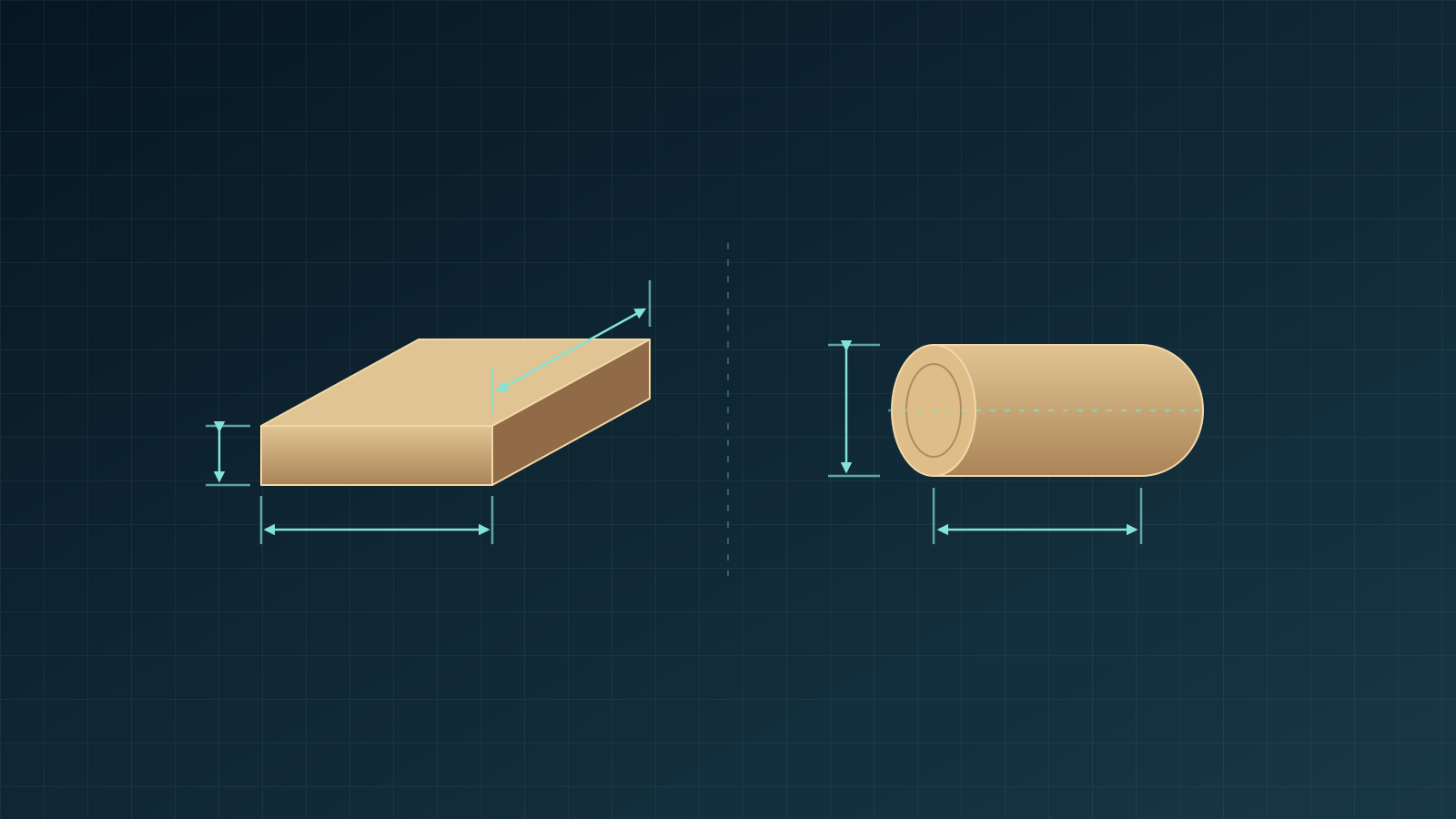
Start with PEEK plate for a flat or block-shaped part and PEEK round rod for a cylinder, shaft or another part turned about an axis. The drawing defines the finished part. The machine shop determines how much extra stock it needs to hold the work, machine it and meet the final dimensions.
Match the stock shape to the part
| Shape | Good starting point for | Stock dimensions to specify |
|---|---|---|
| Plate | A flat base, rectangular guide or milled bracket. | Thickness × width × length. Identify the reference face if it matters for assembly or machining. |
| Round rod | A cylindrical spacer, shaft or turned component. | Outside diameter × length. For a stepped part, start with the largest outside diameter the finished part must retain. |
If either shape could work, compare how many usable parts each yields and which operations it requires. Stock close to the finished shape may use less material, but workholding, cut losses and batch size also matter.
Work back from the finished dimensions
- Identify the dimensions that control the stock shape. For plate, use finished thickness, width and length. For rod, use the largest outside diameter and the finished length. If one rod will yield multiple parts, include the part count.
- Agree on the machining allowance with the shop. For plate, identify the faces to machine and how the stock will be held. For rod, allow for facing, parting if needed and the section taken up by the chuck or other workholding. The allowance depends on the process.
- Label finished and stock dimensions separately on the request. Mark the drawing dimensions as finished part and the dimensions you want to buy as stock. If the shop is still sizing the blank, say so and ask what stock shapes and dimensions can be quoted.
Two examples for a quote request
- Flat guide finished at 80 × 40 × 10 mm. Consider plate. Label the finished dimensions in that order as length, width and thickness. For the stock line, give thickness × width × length and include the allowance agreed for each face to be machined.
- Spacer finished at Ø30 × 45 mm. Consider round rod. Confirm the starting diameter and the extra length needed for facing, parting and workholding with the shop.
These examples give finished dimensions to help you prepare a request. Available grades, shapes and dimensions are reviewed for each quote.
What to send when requesting a PEEK quote
Include the exact grade or drawing reference, preferred stock shape, dimensions in millimeters, and quantity. Say whether the quantity means finished parts or pieces of stock. Include the application, delivery city and any required data sheets or other documentation. A dimensioned sketch can be enough to start if you need to keep the full drawing private.
See PEEK in the PomDepot catalog and request a material quote with the information you already have.
Frequently asked questions
What if the part is round but very thin?
Compare the number of discs you can get from plate with the number you can cut from rod. The choice depends on diameter, thickness, cut width and how the part will be held.
What if the drawing only specifies PEEK?
Ask the design owner to confirm the grade or say which alternatives are permitted. Include any electrical, wear or documentation requirements in the request.
Which tolerances belong in the quote request?
Separate finished-part tolerances from any tolerances required on the purchased stock. If stock flatness, straightness or a specific dimensional tolerance matters, give it next to the dimension or feature it applies to.